Why the Difference Matters
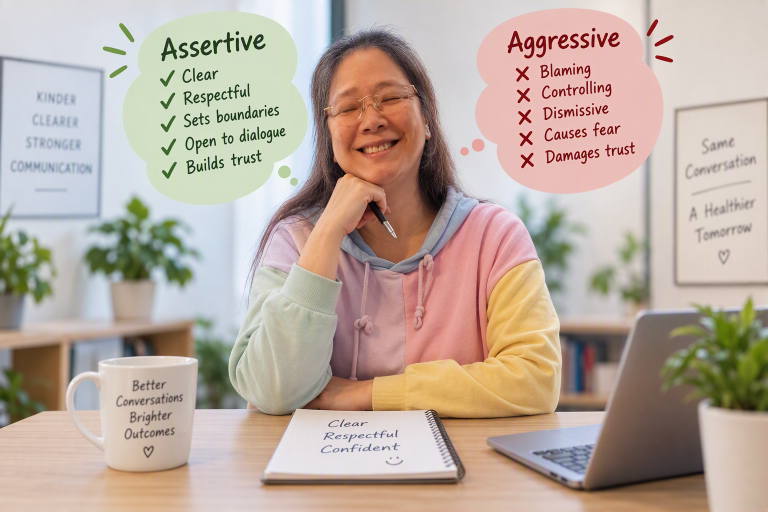
Assertiveness and aggressiveness can look similar from a distance. Both may involve speaking firmly, setting limits or challenging an idea. Yet their purpose, tone and effect are very different. Assertiveness protects your needs while respecting other people. Aggressiveness pushes your needs ahead of theirs, often through pressure, blame or intimidation. Understanding this distinction helps you communicate confidently without damaging trust. Assertive behaviour also reduces ambiguity, helping small frustrations stay manageable when deadlines or emotions are involved.
Many people avoid being assertive because they fear appearing rude. Others become forceful because they believe confidence means winning. Neither response is necessary. Healthy assertive communication creates room for honesty, negotiation and mutual respect. It allows you to say what you think, ask for what you need and refuse unreasonable demands without apology or hostility. Learning the boundary between assertiveness and aggressiveness supports stronger relationships and earlier accountability. It encourages others to communicate openly, as they are less likely to expect either silent compliance or a hostile reaction.
What Assertive Communication Looks Like
Assertiveness is direct, clear and respectful. An assertive person describes the situation, explains its impact and makes a reasonable request. They use a steady voice, appropriate eye contact and open body language. Their words focus on behaviour rather than attacking character. For example, “I need the figures by Thursday so I can finish the report” is specific and solution-focused. It communicates urgency without suggesting the other person is careless. It also avoids vague hints and makes the desired outcome clear.
Assertive people also listen. They may disagree, but they allow others to respond and consider alternative solutions. They can acknowledge another viewpoint without abandoning their own. This balance is important: assertiveness is not simply speaking up; it is communicating as an equal. The goal is not to dominate or to surrender, but to reach clarity. Even when agreement is impossible, an assertive exchange preserves dignity. Curiosity can reveal a misunderstanding before certainty becomes confrontation.
What Aggressive Communication Looks Like
Aggressive communication seeks control rather than understanding. It can include shouting, sarcasm, threats, interruptions, personal criticism or dismissive gestures. It may also be quieter: repeated pressure, contemptuous silence and deliberate exclusion can carry an aggressive message. Typical phrases include “You never get anything right” or “Do it because I said so”. Such language labels the person, closes discussion and turns a problem into a contest focused on winning.
Aggression sometimes produces quick compliance, which can make it seem effective. However, the longer-term costs are substantial. People may become defensive, conceal mistakes, avoid honest feedback or comply resentfully. Trust falls because they expect punishment rather than discussion. The aggressive speaker may miss useful information by silencing others. Fear can create movement, but rarely commitment or psychological safety. Teams and families may then spend more energy managing reactions than solving the original issue.
Assertiveness Versus Aggressiveness: Key Differences
The clearest difference is respect. Assertiveness says, “My needs matter, and so do yours.” Aggressiveness says, “My needs matter more.” Assertive language is specific, proportionate and open to dialogue; aggressive language is absolute, accusatory and meant to overpower. Assertiveness sets a boundary and explains the consequence calmly. Aggressiveness uses consequences as threats. A firm message can still be courteous, while a polished aggressive message can still deny fair participation. Assertiveness accepts that the answer may be no; aggression treats refusal as disobedience and responds by increasing pressure.
Intent matters, but impact matters too. You may intend to sound decisive, yet rapid speech, a raised voice or phrases such as “obviously” can feel belittling. Context also changes how words land. A brief message may be efficient during an emergency but harsh in a routine discussion. Check what you want to achieve and how the other person may experience your delivery. If you notice tension, invite feedback and adjust without losing your request. Taking a breath before replying can keep a necessary challenge from sounding like a personal attack.
How to Be Assertive Without Sounding Aggressive
Prepare a simple structure before a difficult conversation: state the observable facts, describe your response, explain what you need and make a clear request. “When meetings start late, I lose preparation time. Please be ready to begin at ten” is easier to hear than “You are always inconsiderate.” Use “I” statements where they genuinely describe your needs, but avoid using them to disguise blame. Avoid apologies that suggest your need is illegitimate. A polite request can be confident without unnecessary self-criticism.
Keep your voice measured and your message brief. Over-explaining can weaken a boundary, while repeating the same point calmly can strengthen it. If someone refuses a reasonable request, use the “broken record” technique: restate your position without adding insults or escalating. You can also offer choices: “I can complete the urgent task today or both tasks by Friday. Which is the priority?” Choices support collaboration while making limits visible. If emotions climb, pause and agree when discussion will resume.
Responding to Aggression and Managing Conflict
When another person becomes aggressive, regulate your own pace first. Pause, lower your voice and avoid matching their intensity. Name the issue rather than diagnosing their attitude: “I want to resolve this, but I cannot do that while we are interrupting each other.” If the conversation remains unsafe or abusive, end it and return later. Physical safety comes first: move away and seek support if there is immediate risk. Leaving calmly protects the possibility of a productive conversation later.
Ask focused questions to move from accusation to specifics. “What outcome do you need?” can reveal the real problem. Summarise what you have heard, then state your boundary and next step. At work, record important agreements and follow the appropriate process if intimidation, harassment or repeated hostility continues. Focus on what you can control: your language, limits and follow-up, not whether an aggressive person approves. Where possible, agree a time, owner or action.
Everyday Examples of Assertiveness and Aggressiveness
Imagine a colleague repeatedly sends requests near the end of the day. A passive response is to accept everything and work late. An aggressive response is, “Your poor planning is not my problem.” An assertive response is, “I cannot complete this today. I can deliver it tomorrow afternoon, or we can ask the manager to reprioritise my current work.” The assertive version protects time, avoids blame and presents realistic options. The same approach works in customer service and friendships.
At home, suppose someone makes plans without consulting you. Aggression might sound like, “You only ever think about yourself.” Assertiveness could be, “I was disappointed not to be included. Next time, please check with me before confirming plans that affect us both.” The second response communicates dissatisfaction but identifies the behaviour and desired change. When you make a mistake, an assertive apology names what happened and how you will repair it, without excuses.
Assertiveness improves through practice rather than personality change. Start with lower-stakes situations: correct an incorrect order, ask for clarification or decline a minor request. Plan one sentence in advance and notice whether your words are clear, respectful and specific. Rehearse difficult phrases aloud so that a calm tone feels natural when pressure rises. Pay attention to posture, facial expression and pace. Keep notes on phrases that worked, then adapt them until direct communication feels familiar.
Notice the difference between discomfort and danger. A respectful boundary may disappoint someone, and their disappointment does not automatically mean you communicated badly. Give the other person time to process your message, but do not dilute it simply to remove temporary tension. When compromise is appropriate, make it explicit: identify what each person will change, what remains non-negotiable and when you will review the arrangement.
If you slip into passivity or aggression, treat the moment as useful feedback. Pause, acknowledge the delivery and restate the message: “That came out more sharply than I intended. My concern is the deadline, and I need us to agree a realistic plan.” Repairing quickly models the same respect you are requesting. With repetition, this combination of honesty, calm boundaries and willingness to listen becomes a durable communication habit.
Over time, assertiveness becomes a reliable middle path between silence and attack. It helps you express disagreement, protect priorities and deal with conflict while recognising the rights of others. Before speaking, ask three questions: Is my message honest? Is it respectful? Is my request clear? Consistency matters, so follow through on stated consequences, recognise other people’s boundaries and apologise when your delivery becomes sharper than intended. Agreement is not guaranteed, but disagreement gains a healthier structure.